Do Not Commit to Therapy.
Commit to One Extraordinary Session.

Christine Joanna Hart — Depth Psychotherapist, Sunday Times Bestselling Author and Former Fleet Street Journalist

I Spent Thirty Years Searching For What Actually Heals Trauma
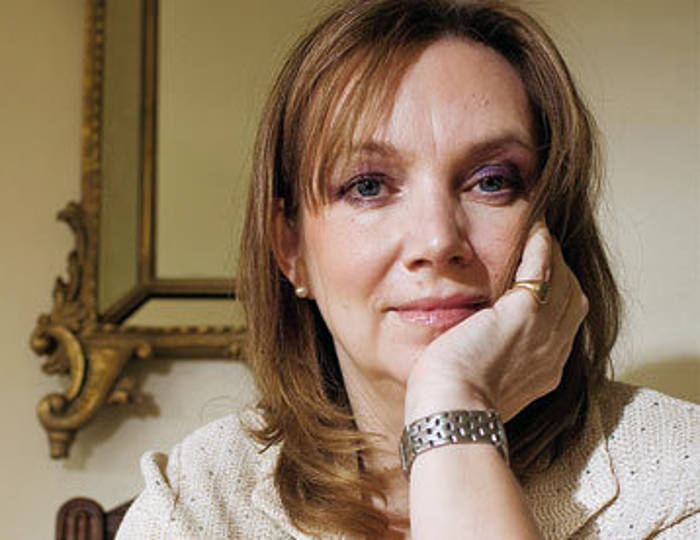

My search did not begin in a classroom. It began with my own survival.

I was adopted and experienced severe childhood trauma and abuse. I knew from the inside what it meant to appear capable while younger parts of the self remained frightened, divided and permanently prepared for danger.

I also discovered something deeply frustrating: you can understand your trauma perfectly and still be controlled by it.


I Refused to Accept That Talking Was the Only Answer


For more than thirty years, I searched through different forms of psychotherapy and healing to discover what could reach the places ordinary conversation could not. I explored CBT, EMDR, psychodynamic psychotherapy, Jungian psychology, attachment theory, trauma therapy, somatic approaches, guided imagery, regression, inner-child work, parts therapy and other experiential methods.

In Los Angeles, I explored primal therapy and work designed to reach the earliest emotional roots of adult pain. I suffered, I searched, I crossed continents and systems and states of consciousness because I refused to accept that pain should remain untouched simply because respectable methods had run out of road. I went looking for the missing medicine because the approved medicine did not go deep enough.

Some approaches gave insight. Some helped the nervous system. Some reached memory, symbolism or the body. Some did very little. I kept searching.

At Nineteen, I Had a Near-Death Experience


That experience radically changed my understanding of consciousness. It left me unable to believe that the human mind could be understood only as a collection of thoughts, behaviours and diagnoses.

There was something deeper. Something symbolic. Something spiritual. Something in us that could become lost, divided or exiled and still call out to be found.

My search took me to India and Peru, where I explored spiritual and shamanic traditions, ritual, energy work and ancient ways of understanding trauma and the soul. I worked with ayahuasca and entered forms of consciousness that conventional Western psychology rarely discusses.

I did not abandon psychology. I went looking for what psychology had left out.

I Searched Across Both Worlds


Western psychotherapy helped me understand attachment, defence, repetition, trauma and the unconscious. Shamanic traditions helped me understand the experience of soul loss: the sense that after abuse, betrayal, terror or grief, some essential part of the person has disappeared.

Parts work gave me a bridge between the two — a frightened child, a merciless critic, a rescuer, a saboteur, a protector who never sleeps. These are psychological realities, but they are also living presences within the inner world. The label matters less than whether we can reach them.

What I Found


The part causing the problem is often the part that once saved the person. Anxiety may be preventing exposure. A phobia may be preventing helplessness. Depression may be burying grief or rage. Obsessive thinking may be attempting to control uncertainty. Self-sabotage may be protecting you from visibility, failure, envy or abandonment.

The protector is not trying to make you happy. It is trying to keep you alive.

My work helps that protector understand that the original emergency has ended.

Formal Training


After decades of personal and independent exploration, I completed four years of formal integrative psychotherapy training. I am a Registered Member of the British Association for Counselling and Psychotherapy, MBACP.

My work is psychologically grounded, trauma-informed and professionally insured. I draw upon depth psychotherapy, psychodynamic and Jungian thinking, parts work, guided imagery and, where appropriate and welcomed, shamanic work, soul retrieval, psychometry and spiritual mediumship.

I do not force every client into the same method. I spent thirty years discovering that human beings do not all heal through the same door.

Before Psychotherapy, I Investigated Other Kinds of Hidden Truth


Before becoming a psychotherapist, I worked on Fleet Street as an investigative journalist. I wrote for the Daily Mail and The Sunday Times. I interviewed public figures and moved through newsrooms, courtrooms, television studios and private worlds concealed behind carefully managed appearances.

My first book, Searching for Daddy, was published by Hodder & Stoughton and became a Sunday Times bestseller, and was translated into Punjabi by Methdi Publishing House.

That life trained me to notice what does not fit — the hesitation, the missing detail, the sudden change of subject, the polished story concealing a much darker one underneath.

Psychotherapy is not journalism, but I bring the same instinct to both: what is the real story?

I listen for the live wire. I notice where the body tightens, where the voice changes and where the apparently minor detail carries the emotional charge. I do not spend months admiring the locked door. I look for the key.

Why Clients Call Me a Shaman


Over the years, many clients have described me as a shaman. I understand why. My work is rooted in psychotherapy, but it can move beyond ordinary conversation into dream, image, symbol, ancestral material, guided journeying and the recovery of lost parts of the self.

I do not use the word as decoration. A shaman traditionally moves between worlds to retrieve what has been lost. That is what happens in my work. We find the part of you that remained inside the trauma. And we begin bringing it home.

“I know where people become lost. I know how many doors there are. Let us find yours.”

Get in touch

If you feel that my study, gifts and training talents can be of benefit to you then please get in touch from my contact page.